Thomas Haigh -- Home Page

Home
About Me
Teaching
Research
Vita
Contact

Want to know about me?
Read the "Me & My Website" page.

Contact me at
thaigh@computer.org

Latest Additions

  •  I've contributed several short profiles to the ACM Turing Award Winners website, which ACM has been greatly expanding, under the editorship of Mike Williams, in preparation for a celebration held in connection with the Turing centenary. My articles on Charles W. Bachman and William Kahan have been published, while a promised third piece on Nicklaus Wirth is being delivered shamefully late but should be following soon. (May-4-2012)

  •  "Did V.A. Shiva Ayyadurai Invent Email? A Computer Historian Responds" My contribution to the recent mini-flurry of media attention given to what Gizmodo memorably called "The Crazy Story of the Man Who Pretended to Invent Email" (Gizmodo story here). My own article is a little more measured, focused on the claims themselves and outlining enough of the actual history of email, some of which had not been properly researched before, to establish their lack of merit. It was commissioned by the Washington Post, as part of a series cancelled for reasons that remain largely mysterious. So instead read it on the SIGCIS website. (At least my initial message on the topic did reach a broader audience, after it was picked up by Techdirt and Gizmodo).(Apr-12-2012)

  • "The IBM PC: From Beige Box to Industry Standard," Communications of the ACM 55:1 (Jan 2012):35-37. This contribution for the "Historical Reflections" column gives a concise and jargon free summary of my thoughts on the evolution of the IBM PC as a kind of platform and standard unique in the history of computing, and perhaps in the history of technology more broadly. I've presented work on this topic previously, but not yet published a longer version. (online at ACM) (online locally) (Jan-19-2011)

  • "Charles W. Bachman: Data Base Software Pioneer," IEEE Annals of the History of Computing 33:4 (October-December 2011):70-80. A biography of Charles W. Bachman, inventor of the data base management system, had originally been planned for the 2009 special issue of IEEE Annals on early data base systems. Space constraints prevented this, but the biography has now been completed and published.  (online locally) (online IEEE CS) (Nov-5-2011)

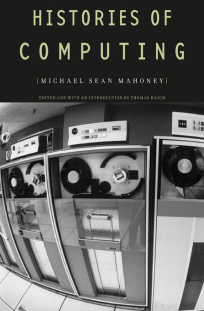
  •  Harvard University Press has published Histories of Computing, a collection of key papers on the historiography of computing, software, and computer science by the late Princeton professor Michael Mahoney. As editor I had responsibility for selecting Mahoney's most important papers, grouping them together, and making edits to minimize duplication between papers while preserving the full range of his insights. My most important contribution, however, was writing the historiographic introduction "Unexpected Connections, Powerful Precedents, and Big Questions: The Work of Michael S. Mahoney on the History of Computing." At the request of HUP I've now taken down a preprint of this chapter, but the book is available for purchased at Amazon or to read in a growing number of libraries. (5-Aug-2011)

  • Here's a late draft of my chapter "Technology's Other Storytellers: Science Fiction as History of Technology" to appear in a forthcoming volume on science fiction and computers (Science Fiction and Computing: Essays on Interlinked Domains ed. David L. Ferro and Eric G. Swedin). It's a labor of love, dealing with some issues I've thought about a lot over the past few decades (and taught a course about) but have never tried to write about before. These is some relevance to history of computing, but it's primarily aimed at persuading historians of technology to take science fiction more seriously. (Draft online here). (14-Dec-2009) Update: the book is now available for purchase at Amazon. (28-Jul-2011)

  • Together with Bernardo Bátiz-Lazo I've written an account of early computer use in the Mexican civil engineering giant ICA. We tried to get at some interesting connections between corporate structure, national political systems, business models, emerging occupational identities, and computing practice. The paper "Engineering Change: The Appropriation of Computer Technology at Grupo ICA in Mexico (1965-1971)" will appear in IEEE Annals of the History of Computing, but an online preprint of a late draft is already available online locally. (26-Jan-2011)

  •  "John R. Rice: Mathematical Software Pioneer," IEEE Annals of the History of Computing 32:4 (October-December 2010), 72-80. This completes a "trilogy" based on oral history interviews and other research on mathematical software I conducted for the Society for Industrial and Applied Mathematics back in 2003-5 under a Department of Energy grant. The other subjects were Cleve Moler and Jack Dongarra. (online locally) (online at IEEE CS) (online at Project Muse)

  • In the scholarly literature on the history of software, no idea looms larger than the "software crisis" of the late 1960s and no event has been more discussed than the NATO Conference on Software Engineering held in 1968. Yet I've always been surprised by how little they feature in the primary literature for most computing communities in the 1960s and 1970s. My involvement in the Software for Europe Project has stimulated research to investigate this, leading to some exciting discoveries regarding the actual content of the 1968 conference and its relationship to the Algol 68 story being studied by other project participants. My most recent draft on this topic, "Dijkstra's Crisis: The End of Algol and the Beginning of Software Engineering:1968-1972" has been precirculated for discussed at the September meeting of project participants in Leiden and is intended for inclusion in the project's edited volume. (Read the latest version online here). A longer and earlier version, "Crisis What Crisis? Reconsidering the Software Crisis of the 1960s and the Origins of Software Engineering" was presented at the Inventing Europe meeting in Sofia in June. The earlier version lacks some important findings about Algol, and is generally less polished and reliable, but does include additional material on the historiography of the software crisis and the origins of the "crisis" and spread of the crisis removed from "Dijkstra's Crisis" for space reasons (earlier version online here). (21-Aug-2010)

  • My paper "Computing the American Way: Contextualizing the US Computer Industry of the 1950s and 1960s" has now been published in IEEE Annals of the History of Computing 32:2 (April-June 2010):8-20. It grows directly out of my work as an "associate partner" on the ESF Software for Europe project, and was first presented at the "Appropriating America, Making Europe" Inventing Europe Eurocores European Science Foundation workshop in Amsterdam. (online at IEEE CS) (online locally) (30-June-2010)

  •  "The History of Information Technology," Annual Review of Information Science and Technology 45 (2011): 431-487. Since 1966 the ARIST has been one of the premier publication venues in information science, home to long review essays exploring the literature and key ideas in broad areas of research. I got there just in time, as the 2011 volume is to be the last and there are not many other outlets that could provide the luxury of more than 26,000 words to survey the whole literature. Read a preprint version online. (12-May-2010)

Best of the Older Stuff

  • A half hour interview I did with the local NPR station is available online for your listening pleasure. "The Evolution of Computers," UWM Today,  May 8 2008. Online here.

  • One of my papers, “Inventing Information Systems: The Systems Men and the Computer, 1950-1968” Business History Review 75 (Spring 2001): 15-61 is the first real look at the role of the "systems men" -- experts in administrative techniques -- as staff managerial specialists within the American corporations of the 1950s and 1960s. It examines the emergence of the modern concepts of information and information systems as political tools within this history of corporate management, focusing particularly on the designation of the computer as a tool for management information. The full text is accessible from my writing page.

  • My paper "The Chromium-Plated Tabulator: Institutionalizing an Electronic Revolution, 1954-1958", IEEE Annals of the History of Computing 23 (October-December 2001): 75-104 tells the story of the first four years of administrative computing in the USA. It is the first in-depth, overall study of how early administrative computers were brought and sold, what they were used for, and the new kinds of jobs that emerged around them. It reveals the extent to which the use of computers was shaped by the earlier technologies of punched card machines, and draws attention to the importance of the data processing department as a new corporate institution. This is also accessible from my writing page.

  • “Software in the 1960s as Concept, Service, and Product", IEEE Annals of the History of Computing 24:1 (January-March 2002). (Click here for the issue contents page). Chosen as the leading article for a special issue on the early history of packaged application software, this article surveys the origins and early ambiguities of the term "software", the origins of packaged application programs and their relationship to the concerns of data processing managers. Here it is as published

  •  "Remembering the Office of the Future: Word Processing and Office Automation before the Personal Computer," IEEE Annals of the History of Computing 28:4 (October-December 2006):6-31. This article explores the technical, business, and social history of word processing during the 1960s and 1970s. It is part of a special issue on the history of word processing, representing the first sustained historical examination of this important technology. Read it online.

  • I wrote two chapters for the 2008 MIT Press book "The Internet and American Business" edited by William Aspray and Paul Ceruzzi. The first one, "Protocols for Profit: Web and Email Technologies as Product and Infrastructure" tells the business and technological history of development of Internet web browsing and email/messaging systems. I focus particularly on the ways in which the design features built into pre-commercial Internet technologies during the 1980s influenced directions taken by the commercial Internet of the 1990s. Read a preprint version here. The second, "The Web's Missing Links: The Search Engine & Portal Industry" does a similar job for the development of the web navigation industry.  Read a preprint version here

  •  "How Data Got Its Base: Information Storage Software in the 1950s and 1960s" builds on my earlier paper on the topic to expand coverage of collaborative projects in the area particularly the generalized file maintenance and reporting systems of the 1950s. (Online here) (10-Dec-2009)


Page copyright Thomas Haigh -- email thaigh@computer.org    Home: www.tomandmaria.com/tom. Updated 03/22/2011.