Thomas Haigh -- Home Page

Home
About Me
Writing
Teaching
Research
Historians Directory
History Resources
Vita
Contact

Want to know about me?
Read the "Me & My Website" page.

Contact me at
thaigh@computer.org

Latest Additions

  •  A half hour interview I did with the local NPR station was broadcast recently and is now available online for your listening pleasure. "The Evolution of Computers," UWM Today,  May 8 2008. Online here. (21-May-2008)

  •  Two biographies from my work with the SIAM History Project have now been published. The first is of Cleve Moler, creator of Matlab and co-founder of The MathWorks. The second is of Jack Dongarra, a leading force behind many mathematical software packages and supercomputing guru. "Cleve Moler: Mathematical Software Pioneer and Creator of Matlab" IEEE Annals of the History of Computing 30:1 (January-March 2008), 87-91 is online. "Jack Dongarra: Supercomputing Expert and Mathematical Software Specialist" IEEE Annals of the History of Computing 30:2 (April-May 2008), 74-81 will follow soon. (21-May-2008)

  •  My oral histories from the SIAM oral history project keep trickling onto the web as interviewees get around to editing and approving transcripts two or three years after the interview. The latest ones include a six hour interview with celebrated Stanford numerical analyst Gene Golub who died recently. See them all, and more besides, at history.siam.org. The transcripts should be joining the collection of the Charles Babbage Institute soon. (07-Apr-2007)

  •  I wrote two chapters for the MIT Press book "The Internet and American Business" edited by William Aspray and Paul Ceruzzi. This era of the Internet's development is currently too old for journalists but too new for historians -- I hope that the book will begin the process of putting it into context. The book has not appeared yet, but I did update my draft versions with some of the minor fixes from the editing process to share them here. The first one, "Protocols for Profit: Web and Email Technologies as Product and Infrastructure" tells the business and technological history of development of Internet web browsing and email/messaging systems. I focus particularly on the ways in which the design features built into pre-commercial Internet technologies during the 1980s influenced directions taken by the commercial Internet of the 1990s. Read a preprint version here. The second, "The Web's Missing Links: The Search Engine & Portal Industry" does a similar job for the development of the web navigation industry.  Read a preprint version here (05-Oct-2007)

  •  Communications of the ACM published my article "Sources for ACM History: What, Where, Why" written with Elisabeth Kaplan and Carrie Seib of the Charles Babbage Institute. The paper is an outgrowth of my work with the ACM History Committee to advise the association on its historical initiatives. Read the final published version. (12-June-2007)

  •  "Remembering the Office of the Future: Word Processing and Office Automation before the Personal Computer," IEEE Annals of the History of Computing 28:4 (October-December 2006):6-31. This article explores the technical, business, and social history of word processing during the 1960s and 1970s. It is part of a special issue on the history of word processing, representing the first sustained historical examination of this important technology. Read it online. (04-Dec-2006)

  • The ACM Digital library now includes my oral history interviews with Charles W. Bachman, Turing Award winner and creator of IDS, the first data base management system. I'm very pleased with it, and Bachman himself put a great deal of effort into editing and improving the transcript after the interview. The ACM title page for it is here is but you'll need ACM Digital Library access to read it... unless you read my copy instead. (10-Sep-2006)

  • The ACM Digital Library also include my interview with Walter M. Carlson, former ACM president. You can find that one here , and my copy of the full text here. (Note -- for some reason ACM hasn't added a title page with copyright and citation information, it's not just me naughtily leaving it out). (10-Sep-2006)

  •  A revised, improved and illustrated version of my paper "'A Veritable Bucket of Facts': Origins of the Data Base Management System, 1960-1975." is now available, following its republication in SIGMOD Record, the publication of the Special Interest Group on Management of Data of the ACM. The article is available online. (16-Aug-2006)

  •  Many of the oral history interviews I conducted during 2004-2006 with mathematical software pioneers for the SIAM History Project are now online at the project website. Visit it at history.siam.org. More will appear over time, as interviewees edit and approve them, and they should be joined with a collection of historic documents for an online archive. They include an interview with Cleve Moler, creator of Matlab. (04-Jun-06)

Site Highlights

  • Interested in the history of computers and computing? Check out my Computer History Resource File -- a selection of essential books and websites on the topic, plus links to relevant course syllabi and articles. This goes with my article, “The History of Computing: An Introduction for the Computer Scientist” in Using History to Teach Computer Science and Related Disciplines ed. Atsushi Akera & William Aspray (Washington, D.C.: Computing Research Association, 2004):5-26. (online) You may also want see the syllabus, discussion questions and on-line resources for my old Colby College course ST297: Technology and Revolution: Computers, Culture and the Internet.

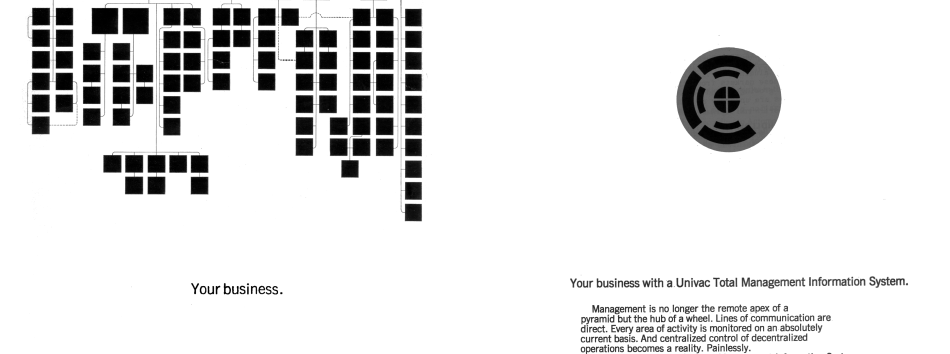
  • One of my papers, “Inventing Information Systems: The Systems Men and the Computer, 1950-1968” Business History Review 75 (Spring 2001): 15-61 is the first real look at the role of the "systems men" -- experts in administrative techniques -- as staff managerial specialists within the American corporations of the 1950s and 1960s. It examines the emergence of the modern concepts of information and information systems as political tools within this history of corporate management, focusing particularly on the designation of the computer as a tool for management information. The full text is accessible from my writing page.

  • My paper "The Chromium-Plated Tabulator: Institutionalizing an Electronic Revolution, 1954-1958", IEEE Annals of the History of Computing 23 (October-December 2001): 75-104 tells the story of the first four years of administrative computing in the USA. It is the first in-depth, overall study of how early administrative computers were brought and sold, what they were used for, and the new kinds of jobs that emerged around them. It reveals the extent to which the use of computers was shaped by the earlier technologies of punched card machines, and draws attention to the importance of the data processing department as a new corporate institution. This is also accessible from my writing page.

  • “Software in the 1960s as Concept, Service, and Product", IEEE Annals of the History of Computing 24:1 (January-March 2002). (Click here for the issue contents page). Chosen as the leading article for a special issue on the early history of packaged application software, this article surveys the origins and early ambiguities of the term "software", the origins of packaged application programs and their relationship to the concerns of data processing managers. Here it is as published

  • "'A Veritable Bucket of Facts:' Origins of the Data Base Management System," ACM SIGMOD Record 35:2 (June 2006). A revised and improved version of a previously published paper. This is the first attempt by a professional historian to chart the origins of one of the most important kinds of software: the data base management system. (online)


Page copyright Thomas Haigh -- email thaigh@computer.org    Home: www.tomandmaria.com/tom. Updated 10/20/2005.